



How to Improve Sandy Soil

I'm here to share a topic that’s both fascinating and personal to me: gardening in sandy soil.
For the past 15 years, I’ve been cultivating a sandy lot south of Raleigh, NC. While the clay line is less than a mile away, my property feels more like a coastal retreat. No matter how deep I dig, it’s nothing but sand as far as the shovel can reach!
When I first moved here, I was taken aback by the pale, powdery soil beneath my feet.

Having been accustomed to the dense, bright red Carolina clay that clings to shoes and stains everything in its path, this sandy terrain is a stark contrast to clay.

The Challenges of Gardening in Sandy Soil
Over time, I’ve come to appreciate both the challenges and unique opportunities that come with gardening in sand.
Sandy soil can be confusing for gardeners because most of the information you find discusses heavy clay soil types. In contrast, sandy soil is characterized by:
- Large sand particles and a loose texture
- The large size of sand particles causes fast drainage that often leads to nutrient and moisture loss, making it difficult for plants to thrive
- Sand lacks the organic matter needed to hold water and nutrients, leaving plants more vulnerable to drought and nutrient deficiencies
- Low microbial activity in sandy soil means plants receive fewer natural soil-based benefits, such as disease suppression and nutrient cycling
How I Improve Sandy Soil
Improve Sandy Soil with Organic Matter
The most effective tool for transforming sandy soil is organic matter. By increasing organic matter in the soil, you enhance its water-holding capacity, nutrient retention, biological activity, and overall structure.
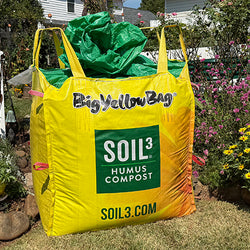
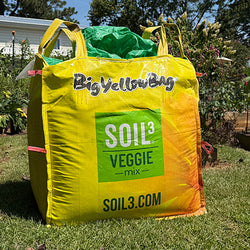
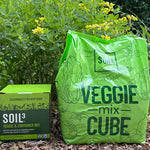
Consistently incorporating organic matter over time will revolutionize your gardening results. Organic matter is available in many forms, ranging from autumn leaves and grass clippings to decomposed kitchen scraps and high-quality, commercially produced compost such as Soil³ compost or Veggie Mix. (I hold the compost in the picture below.)

Improve Sandy Soil by Planting Cover Crops
Besides adding compost to beds, one of my favorite methods of enriching sandy soil is through active gardening itself. A decade ago, inspired by the practice of farmers tilling crops back into their fields, I began direct seeding annuals as cover crops. Instead of removing these plants at the end of the season, I collect their seeds and mow the plants down in place, allowing them to break down and decompose naturally. This process adds organic matter directly to the soil without disturbing its structure. Over time, this simple yet powerful strategy helped transform my sandy soil, making it more nutrient-rich, moisture-retentive, and supportive of healthy plant growth.
To ensure the success of these cover crops, I first had to amend the soil with a nutrient-rich compost layer, which is where my love for Soil³ compost and Veggie Mix began. These products are packed with essential organic matter, beneficial microbes, and humic acid that work to fix my ground. Regular applications of Soil³ compost not only jump-started the germination and growth of my cover crops but also supported the long-term health of the soil itself.

How Compost Improves Sandy Soil
Organic matter does more than improve fertility; it enhances soil texture and promotes a thriving ecosystem of microorganisms that play a critical role in breaking down nutrients and suppressing soil-borne diseases. In sandy soil, where water and nutrients often leach away quickly, building organic matter is not just beneficial but essential. Whether you’re using compost, cover crops, or a combination of both, integrating organic matter into your gardening routine is a game-changer for turning poor soil into a productive and sustainable foundation for growing.
Soil³ compost is an organic humus made from fully composted natural materials of dairy cow manure and grass biomass (including grass clippings, wheat stubble, grass cover crops). It naturally contains beneficial microbes, essential nutrients, and organic matter. That is everything sandy soil needs to thrive. Here are the key benefits of adding Soil³ compost to sandy soil:
- Compost Enhances Water Retention in Sandy Soils: Organic matter in Soil³ compost acts like a sponge, helping sandy soil retain moisture for longer periods. This reduces the need for frequent watering and helps plants withstand dry spells.
- Compost Improves Sandy Soil Structure: Adding Soil³ compost improves the texture of sandy soil, giving it a crumbly structure that promotes root growth and enhances aeration. This encourages healthy root systems, which are essential for strong, resilient plants.
- Compost Increases Nutrient Retention in Sand: The fine particle texture of Soil³ compost binds to sandy soil particles, creating a matrix that holds essential nutrients in place. This prevents nutrients from leaching away with water, ensuring plants have access to what they need to grow.
- Compost Augments Long-Term Fertility in Sand: Unlike synthetic fertilizers, which provide a quick but temporary nutrient boost, Soil³ compost enriches soil over time. Regular applications can build long-term fertility, creating a garden that improves with each passing season.
-
Compost Boosts Sandy Soil Microbiology: Soil³ compost is teeming with beneficial microbes that jump-start biological activity in sandy soil. These microbes help break down organic matter, make nutrients more available to plants, and suppress harmful pathogens.
How to Apply Compost to Sandy Soil
Transforming sandy soil with Soil³ compost is both effective and surprisingly simple.
My go-to method is straightforward: topdress everything!
Years ago, I discovered that tilling compost into the native sandy soil was not only backbreaking work but also counterproductive. Tilling disturbed the soil structure and exposed dormant weed seeds to sunlight, causing them to germinate in abundance. This revelation led me to embrace no-till gardening as a more sustainable and efficient approach.
Now, instead of tilling, I layer Soil³ compost directly on top of my beds. There’s no need to remove existing mulch (unless it is pinestraw). I simply spread the compost on top and plant directly into it. Over time, the roots of growing plants naturally work their way into the native sandy soil, acting as living rototillers to integrate the compost and improve the sandy structure below. This method not only minimizes weed pressure but also protects the existing microbial life and soil health.

Plant Cover Crops after Compost Topdressing Sandy Soils
While Soil³ compost is a game-changer for sandy soil, combining it with other sustainable practices, like cover cropping, can further enhance results.
When Soil³ compost or Veggie Mix is in place, it’s time to sow the first round of seasonal cover crops. Some of my favorites are spring-flowering cover crops such as poppies, nigella, larkspur, and other cottage garden favorites. These plants serve a dual purpose: as they grow, their roots act as natural tillers, breaking up the soil and improving its structure. They are also gorgeous when in full bloom and attract a wide array of pollinators.
At the end of the season, I collect their seeds for future planting and mow the remaining stalks in place, allowing them to decompose and add another valuable layer of organic matter to the soil.

Then, for the next growing season, it's time to start the process over again by top-dressing the beds with another layer of Soil³ compost, further enhancing the soil’s fertility and structure. This sets the stage for summer planting, creating a continuous cycle of soil enrichment and sustainable gardening. By integrating flowering cover crops into this process, I not only improve the health of my sandy soil, but also enjoy vibrant blooms that support pollinators and enrich the garden ecosystem.
Cover crops can be categorized into three distinct types: fixers, scavengers, and chop and drops. All cover crops are annual, meaning they complete their life cycle of growing, flowering, setting seed, and dying within a single season. In my experience, none of these plants have proven invasive. In fact, I’ve come to embrace the self-sowers that appear each season, knowing they are some of the hardest-working plants in my garden.
Cover crops offer a multitude of benefits, including improving soil health, reducing erosion, suppressing weeds, increasing biodiversity, and facilitating nutrient acquisition. While most cover crops thrive in full sun, I’ve found that many varieties are surprisingly adaptable and will perform well in partial sun, requiring as little as four hours of direct light. They are also incredibly easy to grow by direct seeding into a fresh layer of Soil³ compost as I previously explained.
For a deeper dive into cover crops, here are two other articles I've written for the Soil³ blog:
By incorporating these types of cover crops into your gardening practices, you can achieve healthier, more fertile soil with minimal effort. Whether you’re working to replenish nutrients, aerate compacted soil, or prepare beds for future planting, cover crops are a versatile and sustainable tool for soil improvement. Plus, their vibrant growth adds life and biodiversity to the garden, proving that practical solutions can also be beautiful.
Sandy Soil is Fixed with Compost
I hope you see that there are obtainable ways to improve sandy soil, so you can overcome its challenges and create an environment where plants can flourish.
With better water retention, nutrient availability, and soil health from compost, your garden will thrive season after season. Soil³ compost is not just an amendment; it’s a long-term investment in the success of your garden.
Happy Gardening,
Brie the Plant Lady


