



How Does Compost Improve Dirt in a Vegetable Garden?

Greetings, fellow gardening enthusiasts! Let’s delve into the details of what makes the best soil for cultivating all our favorite food crops.
The topic is large, but the solution is simple: organic matter! I will use the words compost and organic matter interchangeably in this blog post, and, of course, Soil³ Veggie Mix is what I use in my own vegetable garden.
The goal for every vegetable grower is to have beautiful black soil that is easy to dig in and naturally provides everything plants need.
As a Midwest native, I am always trying to recreate what I grew up with in Michigan. Why don’t we have that here in the Southeast?
The answer is simple: the ground doesn’t freeze often in the south, meaning organic matter still decomposes in the winter, making it difficult to retain. We also receive significant winter precipitation, which causes that good stuff to run off our properties. These are the simple reasons why gardeners constantly need to add more organic matter to improve the ground we grow in.
Organic Matter Improves Soil Texture
First, keep in mind that roots grow in the air space between soil particles. This is why plants suffer in compact conditions: there is nowhere for the roots to stretch.
Now, imagine the ideal soil texture composed of multiple particle sizes, providing adequate air space for root development, as shown by the loams in the Soil Texture Triangle. The ingredients of the ideal soil texture are balanced sand, silt, and clay, plus water and organic matter.

Sand plays an important role by enhancing drainage and structure. The granular texture allows water to move through the soil more freely, preventing waterlogged conditions. Silt, which consists of small rock and mineral particles, akin to the texture of flour, increases fertility and acts as the mediator between steadfast sand and moisture-retaining clay. Clay, while sticky and compacted on its own, is indispensable for retaining moisture. The small particles retain water effectively, mitigating fast drainage issues caused by sand. Together, these three elements make the ideal soil to grow in.
Here's a simplified cheat sheet for the three key elements of soil texture:
- Sand: Improves drainage
- Silt: Enhances fertility
- Clay: Retains moisture
While most gardeners will never experience a perfect texture balance, we can improve the quality of our sandy or clay soils simply by adding organic matter, thus moving it toward the ideal "loam" soils shown in the center of the triangle.
Organic Matter Improves Soil Structure
Compost acts as a soil conditioner, enhancing soil structure too. It promotes the formation of soil particle aggregates that improve aeration and water regulation.
Aggregates of soil particles, bound by compost, create more air pockets called pores. The increased presence of micro and macro pores relieves compaction in clay soils.
Improved soil aggregation also has an effect on soil water management. In sandy soils, compost aids in water retention, preventing rapid drainage. In dense clay soils, compost improves drainage by preventing soil compaction.
The ability of compost to improve soil structure makes it a gardener’s best friend!

Organic Matter Improves Soil Chemistry
Beyond its textural and structural benefits, compost is a nutrient powerhouse. It not only supplies natural nutrients to plants, but also enhances nutrient availability in the soil. This nutrient enrichment is a game changer for vegetable gardens, ensuring that your plants receive the nourishment they need for growth and abundant yields without having to fertilize.
What about pH? This is a number that denotes the acidity or alkalinity of your soil. The term pH stands for "potential of hydrogen," with the scale ranging from 0 (most acidic) to 14 (most alkaline). In the Southeast US, native soil leans towards the acidic side, sometimes falling as low 5 to 5.5 (often on new construction). However, most vegetable plants prefer slightly acidic to neutral soil, with a pH range of 6.0-7.0. How do you “fix” your ground for optimal vegetable gardening? Start by testing your soil.

Test Your Soil: Before making any adjustments, it is essential to know your soil's current pH. The best way is to send a sample to a local agricultural extension service or Waters Ag Lab for a comprehensive analysis. This baseline information will guide your pH adjustment strategy.
Avoid Quick Fixes: Rapid pH adjustments can stress plants and lead to imbalances in nutrient availability. Aim for gradual changes to allow plants to acclimate. Patience is key when modifying the pH of your soil.
Regular Monitoring: Soil pH is not static, and it can change over time. Monitor the pH of your soil regularly, especially if you've adjusted with lime or sulfur. This helps you stay proactive and make timely corrections if needed. I suggested sending soil samples into the lab every year.
Add Lime for Acidic Soil: If your soil is too acidic (low pH), incorporating lime is a common solution. Lime, typically in the form of calcium carbonate, helps raise the soil pH. The application rate depends on the current pH and the type of soil. Be cautious not to overapply, as excessive lime can lead to nutrient imbalances.
Add Sulfur for Alkaline Soil: Conversely, if your soil is too alkaline (high pH), elemental sulfur can be used to lower the pH range. Sulfur undergoes a microbial conversion process in the soil, producing sulfuric acid and gradually reducing soil pH. As with lime, follow recommended application rates to avoid unintended consequences.
Better yet, Add Organic Matter: The ideal solution for veggie gardeners (and for all gardeners) is organic matter. Incorporating organic matter, such as compost, is a natural and gradual way to influence soil pH. This is also the most practical solution for home veggie growers. Organic matter acts as a buffer, helping to neutralize pH levels. Compost also introduces beneficial microorganisms, which enrich the soil, creating an environment conducive to robust plant growth.
In the southeastern US, where native soils can to be too acidic, incorporating organic matter raises the pH; while in other areas with alkaline soils, compost lowers the pH into a range better for nutrient uptake.
Compost is an ally that elevates your soil's pH, bringing it within the preferred range for most vegetable plants. This adjustment ensures your garden is a welcoming space for all your favorite edibles year-round.
Organic Matter Improves Improves Soil Biology
While compost improves aeration and water regulation in soils, those improvements, in turn, create an optimal environment for beneficial microorganism, fostering a thriving soil ecosystem. This ecosystem includes not only the famous earthworms, but friendly bacterias, beneficial nematodes, protozoa, insects, fungi, and even small mammals and reptiles.
A protozoa with a soil aggregate. Photo by Nestor Vela.
Just Keep Adding Organic Matter
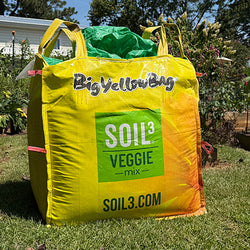
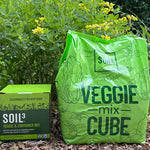
The easiest way to naturally improve the ground you garden on is to add Veggie Mix from Soil³. This compost mix is carefully crafted and designed to provide an ideal environment for growing vegetables. Made from composted organic matter, including aged cow manure and grass biomass, ground pine bark, wood fiber, and activated charcoal. Beneficial microorganisms thrive in it and quickly colonize it in gardens. All these elements combined provide exactly what your plants need to thrive. In essence, Veggie Mix compost transforms your garden into a thriving ecosystem, where each component contributes to the overall vitality.
Sunflower seedlings in Veggie Mix (left) compared to unamended clay soil (right). Photo by Nestor Vela.
Veggie Mix can be used in raised beds, container gardens, and even as a thick topdressing for in-ground growing. No need to add anything to it, as it is perfect and ready to grow in from the moment it lands on your property. No matter how you garden Veggie Mix is here to make your experience a success!
Happy gardening, and may your soil be as vibrant as your garden dreams!
Brie the Plant Lady


