





5 Native Perennial Flowers That Thrived in a Hot Southern Summer

Hot Summer Assessment: Native Flowers That Earned Their Keep
This past summer was so overheated that I hid from my garden from July through mid-September. I couldn’t have cared less what was going on out there. My single objective was to keep the garden alive by making sure the irrigation ran during the many weeks it didn’t rain.
When I emerged from summer aestivation, I found a mess of weeds, some plants about to bloom, and many that fared surprisingly well during weeks in the upper 90s, with warm nights in the mid-70s. I mention night temperature because the temperate plants that I often gravitate to thrive when the nights are cool (I should move to the mountains).
Since native plants are all the rage, for good reason – they are winsome and full of ecological significance – I want to share five native flowering perennials that were “doers” in my Zone 8a garden near Athens, GA, during the sizzling summer of 2026 with hot days and warm nights.
Fun Fact: Roots keep growing underground, even when the stems are dormant. It's a surprising truth about cold-hardy plants! Root growth in autumn gives plants a head start on establishing a larger root system before summer heat and drought.
If these five native perennial flowers intrigue you, right now in fall is a great time to build your beds with compost and plant native flowers.
Downy skullcap (Scutellaria incana) is the botanical surprise of my life.
Somehow, somewhere, I acquired three plants. I wish I could remember where because I want more – to that end, I collected seed to grow more of my own. The thrill of skullcap is the candelabras of blue flowers, buzzing with bees, in June. As the flowers fade, cut them off, and a second flush will grow for more summer flowers later in July and August.
I planted one in this situation (plant A): morning sun exposure and deep, compost-rich soil that gets irrigated twice a week. It’s almost 4 feet tall.
The other two (plants B and C) are in full afternoon sun (which is harsher than morning sun exposure) and compacted clay soil. They are significantly shorter at 1.5 to 2 feet tall. Being out of reach of irrigation, they wilted during weeks of drought. The wilting was stressful to watch, but they quickly rebounded when I dumped buckets of water on them.
When I plant more, I’m going to site them in compost-rich soil like plant A, but more sun like plants B and C because, honestly, the ones in more sun flowered more (even with some drought stress) and had a sturdier stature that didn’t need support. Please note that I wouldn't call this a drought-tolerant plant, even though it recovers well and doesn’t look too tattered or worse for wear after rebounding.
I’m so smitten with downy skullcap that I’ve ordered other species to try. The species Scutellaria incana and others are available from nurseries specializing in native plants, in person and online.


Georgia aster (Symphyotrichum georgianum) is a stunning conversation piece.
This rare native plant absolutely thrives in sunny gardens. It spreads by rhizomes and by seeds, even more so by seeds in gardens than in its limited range where it is threatened (check out this interesting study about late-season pollination success in gardens vs. wild).
I grow my Georgia aster in a compost-rich clay soil, and it seeds into nearby beds and even the gravel driveway with reliable, non-overwhelming regularity. I dig up and give away 3 to 5 driveway seedlings yearly. I honestly would welcome a little more uninhibited seeding around!
The bluish-purplish flowers are large for asters in that color profile, at almost 2 inches in diameter. Anticipating the next question, yes, the flowers attract pollinators.
My patch of Georgia asters is flowering in full abandon, right now at the end of October. The 2-foot-long stems are floppy and need a little help standing up. A plant support hoop or more sunlight would help their posture; instead, I let mine gently spread and sprawl among nearby perennials.
Buy Georgia aster at a native plant nursery or native plant society sale. Once established in your garden, you’ll have seedlings to bulk up your own Georgia aster holdings and to give away.


Scarlet sage (Salvia coccinea) is my living hummingbird feeder.
When I tire after months of refilling hummingbird sugar water, I let this red-flowering perennial take over and supply their needs.
It’s a tender perennial that sometimes overwinters and regrows from the roots in my Zone 8a garden. When it doesn’t overwinter, it’s no big deal because it reseeds freely. The little seedlings transplant easily (especially when you dig them out of loose, compost-rich soil so they don’t snap at the roots), so you can move them to spots you prefer and pot them up to give to friends.
Height and width vary depending on sunlight exposure and proximity to neighboring plants: sometimes fat, sometimes lean, sometimes intermingling thickly with neighboring plants. Full sun grows fatter, denser plants with more flowers; while partial shade creates a leaner, wispier stature, still with quite a lot of flowers.
The cheapest way to acquire scarlet sage is to order seeds online. Sow them in the spring, and by next fall you’ll have more seeds to collect; plus, seedlings will emerge on their own the following spring.
Scarlet sage (red flowers) intermingling with dahlias (pink flowers).
‘Hot Lips’ Turtlehead (Chelone lyonii) is an underrated doer in workable, compost-laden soil.
Before I purchased my own, I never noticed turtlehead when I poked around backyards on garden tours; perhaps that’s because garden tours are in spring, when turtlehead blooms in late summer. Or because it thrives in soils with organic matter, and soil improvement is too often overlooked.
Before blooming, turtlehead is nondescript. Yet, the foliage is pretty when you give it a chance. Some types are typical medium green, while 'Hot Lips' is dark green, adding shades of green to a border.
What I really like about turtlehead is its interestingly shaped turtle-head flowers, which first poke out their heads in August, when my garden is slap worn out from the heat. It’s the one plant that keeps me going in the doldrums! Also, it reliably flowers in partial shade, especially in less-harsh-but-still-direct morning sun with afternoon shade settings. Flowers are bright pink.
I bought one “just to try it,” or so I rationalized at the garden center. A year later, two more are planted near the first and I would have more if I could find them! When you see some for sale, snap them up. They are out there, but not common enough, in my opinion. Mail order is an option.
Turtlehead (pink flowers) paired with downy skullcap (blue flowers).

Blue-stemmed goldenrod (Solidago caesia) has long-term possibilities.
I can hardly peel my eyes away when I’m in the garden! It’s blooming with abandon right now in late October, and has been for weeks, lifting my flower beds out of the summer blues with its yellow flowers, like golden hour sunlight. All goldenrods offer late-season nectar for pollinators; same for blue-stemmed beauty.
Honestly though, I cannot find blue stems . . . anywho . . . blue-stemmed goldenrod flowers well in partial shade. My plants do exhibit phototropic behavior, leaning over and reaching for sunlight, so I believe it will grow well in sunnier environments. The leaning works out - it carves out its own space – playing well with nearby flowering plants in beds and containers.
It's also called wreath goldenrod because of the flowers up and down the stems, like a spray for wreath making. This is a brand new plant for me, my two were planted very recently in the spring, yet they have grown almost 3 feet tall and wide with flowers all along the stem - it's quite something to see. It looks like it's been situated much longer than 6-7 months, yet it's hardly spreading by the roots - it's just got long, wreathy stems.
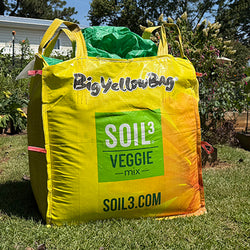
I grow my blue-stemmed goldenrods in compost-rich, irrigated beds, and the container specimen is planted in Veggie Mix.
To build up a larger population of this charismatic late-season showstopper, I’m swinging by native plant nurseries this weekend. I see it for sale at native plant nurseries increasingly often, so you should be able to acquire your own.


Good Dirt Matters
In general, my perennials are growing in compost-rich, workable beds that are irrigated, so I cannot always offer an informed assessment of drought tolerance. Unless I specifically mention exceptions, assume they are in good dirt with plenty of water supplied during droughty weeks.
As for next summer, I can't promise I'll be any more enthusiastic about gardening when temperatures climb into the upper 90s. But I can promise there will be more of these five native perennials growing in my garden. They've earned their keep, and I'm happy to let them do the heavy lifting while I retreat to the air conditioning.
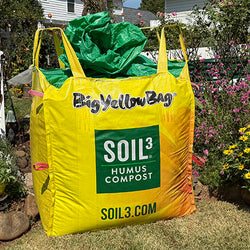
Now that it's fall, I will transplant a few of my current specimens or seedlings, then hit up local nurseries and mail-order websites to add more of these natives to my garden. My BigYellowBag of compost is half full, so I need to order more to finish prepping the beds, but within a few weeks, bigger sweeps of those native flowers will be cherished additions to my garden.
I encourage you to add these "doers" to your garden too; you'll be glad you did!


